
Last updated: July 2026
Most people treat salary negotiation as a moment. One nervous conversation, once a year, where you ask and they decide.
That framing is exactly why you lose.
The companies you work for do not treat pricing as a moment. They engineer it. Every SaaS product you have ever paid for ran you through a carefully designed pricing table, and you picked the option they wanted you to pick, and you felt smart doing it.
This guide takes that same design and hands it to you for your own salary negotiation.
Same psychology, pointed the other way.
By the end you will have a simple table you can build in ten minutes and walk into any raise or offer conversation with, framing the whole thing on your terms.
The table is right here on the page, so there is nothing to download.
TL;DR: Do not walk into salary negotiation with one number and a hopeful face. Companies price you the way SaaS companies price customers, with a tiered pricing table, so build your own. A baseline for what you do now, a Basic floor (same work, fair rate), a Pro tier (new ownership, the one you point them at), and an Enterprise tier (a partner seat that unlocks at real milestones). Bring it out early, talk in tiers, point at Pro, then stop talking. And the law underneath it all: if you grow faster than your workplace can pay for, you leave.
Why Most Salary Negotiation Feels Rigged
The best outcome in any negotiation is a real win-win.
Both sides leave better off. It exists, but it is rarer than people think.
Most of the time when you feel like you won, you did not. The other side was just better at it than you.
You walk out and tell yourself:
“That was the best they could do”
“The market is rough right now, I should be grateful”
“Nobody got a raise this year, so it makes sense”
Sometimes that is true. Often it is a story you were handed so you would stop pushing.
The moment you stop questioning the deal is the moment you either genuinely won, or the moment you were convinced you did.
I have watched people get skipped for a raise over things that had nothing to do with their work.
One person I know got passed over, and the reason that came back was that he had not “dressed professionally” through the year.
That was the justification. Not output, not results. A story.
You cannot control the stories. You can control whether you walk in with structure or walk in hoping.
The Pricing Table Hiding in Every SaaS Tool
Pull up the pricing page of almost any software you pay for. You have seen this shape a hundred times.
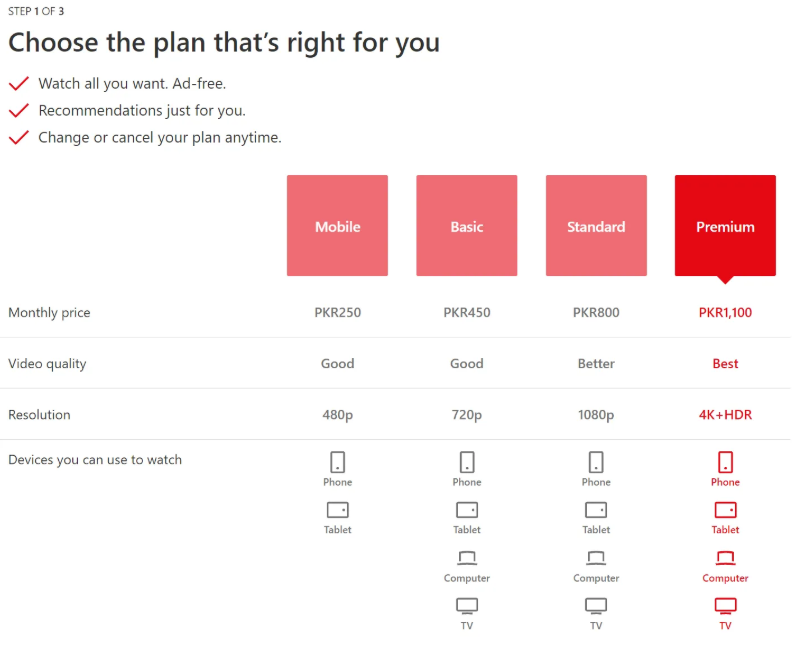
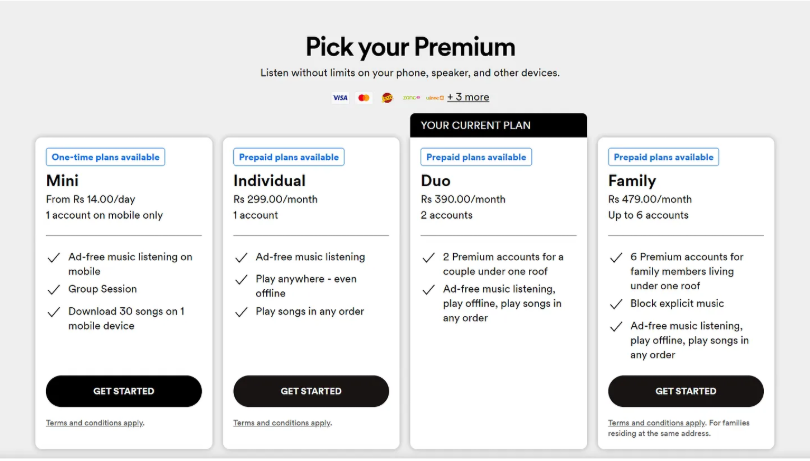
Three columns. Basic, Pro, Enterprise.
One of them wears a little badge: “Most Popular” or “Recommended”
That badge is not an accident, and neither is anything else on the page. It is choice architecture, and it is doing three jobs at once.
First, it anchors you. The Enterprise price sits at the top so the Pro price underneath it looks reasonable by comparison. On its own, Pro might feel expensive. Next to Enterprise, it feels like the sensible middle.
Second, it uses a decoy. The Basic tier is often deliberately a little too limited. Not useless, just annoying enough that you talk yourself out of it. It is there to make Pro the obvious pick, not to be picked itself.
Third, it swaps the real question. You arrived wondering “should I pay for this at all?” and the table quietly replaced that with “which plan should I get?” By the time you are comparing columns, the company has already won the argument that mattered.
Now think about how your raise actually goes.
Appraisal season arrives.
You get pulled into a short call.
Someone tells you what “the best we can do this year” is.
You did not prepare. You brought no numbers of your own.
You picked from the single option you were handed and called it a negotiation.
That is not negotiating. That is reading someone else’s pricing page.
So let us build yours.
First, You Have to Be Able to Walk Away
One thing has to be true before any of this works: you need to be able to walk away.
If you cannot afford to lose the deal, you are not negotiating, you are asking. The other side can feel that, and they price it in. Everything on the table bends toward whoever is willing to stand up and leave.
What lets you stand up is having something they need. Skill they cannot easily replace, a track record they cannot ignore, an outside offer, or simply the savings to survive a few months without them. That is the real groundwork, and it is a bigger topic than this page. I wrote the whole thing up in Why You Can’t Negotiate. Read that first if you have never thought about where your footing actually comes from.
Assume you have some. Now the table gives you a way to use it.
Salary as a Service: Flipping the Table
Build your own pricing page. I call it Salary as a Service (patent pending, obviously).
Instead of walking in with one number and a hopeful face, you walk in with a small table of your own. Same three tiers every SaaS company uses, Basic, Pro, and Enterprise, plus a baseline that shows where you stand today.
This is the actual table I used back when I was a project manager, numbers and all.
| Tier | Compensation / Month | Roles / Responsibilities |
|---|---|---|
| Current Position (your baseline) | 400 USD | – Client-facing communication for projects – Dev-team feedback management – Client onboarding calls – Setting up project folder structures and starter frameworks – Project feedback documentation for the client – A Project Requirements Document for each new project – Daily standups to create and close tasks |
| Same Work, Fair Rate (Basic) | 600 USD | Same as today, just priced to the market |
| Additional Responsibilities (Pro) | 1200 USD | In addition to all of the above: – Company growth strategy – Marketing avenues for new leads – B2B branding on platforms like LinkedIn – Website content marketing – Social media presence – Adding new offerings to the business – Team management if we hire more PMs |
| Role Shift (Enterprise / partner) | 2000 USD | Only once company-level milestones are hit: – At least 2 PMs actively running projects under me – At least 10 custom web-app projects running – At least 3 internal developers and 3 internal designers If those are reached, I take on revenue growth full time, paid on the leads converted through my efforts. Closer to a partner position than a job. |
The point is not to ambush anyone. The point is to change what is being decided. When you put this down, your manager stops deciding whether you get a raise.
They start deciding which version of you they want to pay for. That is a completely different conversation, and it is one you framed.
How to Build Your Own Salary Negotiation Table
Read the table top to bottom, because that is the order you fill your own.
One trap to clear first: build these tiers off your job reality, not your job description. A JD is written vague on purpose, usually with an “including but not limited to” line that exists so the company can ask for anything at the same pay. Do not let it trip you, and do not treat what it permits as the boundary. Basic is what you actually deliver day to day right now. Pro is the ownership you are not doing yet. The whole point of the table is to put a price on the scope that “not limited to” quietly assumes is free.
The Current Position row is your baseline. List your actual core responsibilities, the ones someone would have to absorb if you left, and the pay you get for them right now. In my sheet that was the whole project-management load at 400 USD a month. Do not inflate it. The baseline only anchors well if it is honest.
The Same Work, Fair Rate row is your Basic tier, your floor. Same job, nothing new asked or offered, and the number it would take to keep you without resentment. Mine was 600 USD. Set this against the market and against what you would get if you moved, because your strongest number is not what you feel you deserve, it is what someone else would pay you tomorrow. If you have never worked that number out, What Should Be My Starting Salary? walks through how to price yourself.
The Additional Responsibilities row is your Pro tier, the one you want them to pick. Do not just write a bigger number. Write the trade. In my table, 1200 USD came attached to a full list of extra ownership: growth strategy, lead marketing, B2B branding, new offerings, managing other PMs. The pay jump has to point at value they can see, or it reads as wanting more for the same work.
The Role Shift row is your Enterprise tier, the partner seat. Mine was 2000 USD, and it only unlocked once real company milestones were hit: other PMs under me, ten-plus projects running, a real internal team. At that point the conversation is equity, profit share, or leadership, not a salary bump. Most people never build this row because they never think of themselves as something the business depends on. If that feels like a stretch, read Are You a Product? Or a Service? first, because this tier only makes sense once you do.
And the next time someone asks where you see yourself in five years, you will actually have an answer. In your head, at least.
How to Run the Salary Negotiation Conversation
The table only helps if you use it well in the room. A few rules.
Bring it out early, not as a last resort. If you wait until they have already stated their number, you are reacting. Put your framing down first so the conversation happens inside it.
Talk in tiers, not demands. “I have thought about this in three versions” lands very differently from “I want a raise” One sounds like a partner thinking about the business. The other sounds like a cost.
Point them at Pro. Walk through all three, but make it clear which one you think is the real fit and why. People like being guided to the sensible middle. That instinct is the entire reason pricing tables work.
Then stop talking. You lay out the tiers, you name your Pro number, and you go quiet. Let the silence sit. The person who rushes to fill an awkward silence in a negotiation is usually the one who gives something up.
Expect pushback and do not fold at the first no. “We do not have the budget for Pro” is the start, not the end. Fine, then what does the path to Pro look like, and by when? You just turned a flat no into a timeline. And if they cannot even give you Basic, your own market floor, that is not a rejection to take personally. That is data about whether you should still be here.
Why the Salary Negotiation Framework Works
Writing this down does two things for you.
It gives you a real position to negotiate from. You are not hoping for the best and reading their number off a page. You have a structured proposal, three clear options, and a floor you can defend with an outside offer. The whole psychological setup companies use on customers is now working for you. If you want the deeper piece on why being hard to replace is what earns you this room, read Validating Your Value.
And it gives you a check on the company. If they cannot meet even your Basic tier, your honest market floor, that tells you something you needed to know. Your growth is starting to outrun what this place can pay for. That is not a reason to be bitter, it is a reason to plan. Money is information as much as it is reward, and this table turns a vague feeling of being underpaid into a number you can act on. More on that in Having a Money Mindset.
The Fundamental Law of Salary Negotiation
The whole thing in one line.
If you grow professionally faster than your workplace can pay for, you leave.
That is the fundamental law. Everything above is just how you make it visible.
When your growth outpaces what the company can sustain, the table shows it to you in numbers instead of feelings. And once it is numbers, the decision to stay or go stops being emotional and starts being obvious.
Salary negotiation comes down to knowing what you are worth, showing it clearly, and refusing to be talked out of it with a story. Build the table. Walk in with it. Make them pick a column.
Salary Negotiation FAQs
What if my job description says “including but not limited to”?
That line is not a rule you follow, it is the company’s tool to ask for anything at the same pay, and it is the exact thing this table exists to counter. Ignore what the JD permits. Build your tiers off your job reality, what you actually deliver day to day, not the document. Basic is your current real scope at a fair rate. Anything the JD “allows” but you are not doing yet is Pro, and it comes with a price.
What if I am negotiating a starting salary, not a raise?
The tiers here assume you have a track record to price. A first offer with nothing to point at yet is a different game, and I broke that one down in What Should Be My Starting Salary.
Should I negotiate more than base salary?
Base is only part of the number. Bonuses, equity, and the benefits a job quietly bundles in are all negotiable, and often easier wins than base pay. I went into what those perks are actually worth in The Perks of a Job.
What if I have no outside offer or leverage?
Then you are asking, not negotiating, and they can feel it. Leverage comes first: a skill they cannot easily replace, a track record, an outside offer, or the savings to survive a few months, which comes down to how you manage your money and where you keep it. Build that groundwork before the table. More in Why You Can’t Negotiate and Validating Your Value.
What if the honest answer is that I should just leave?
That is the fundamental law doing its job: if your growth outpaces what this place can pay, leaving is the rational move, not a failure. Where you go next is its own decision, another job or going independent. I compared them in Job vs Freelancing, and if you go independent, Surviving the Feast and Famine Cycles is the reality check.
What if they say no to my Pro tier?
“We do not have the budget for Pro” is the start of the conversation, not the end. Ask what the path to Pro looks like and by when, and you have turned a flat no into a timeline. If they cannot even meet Basic, your market floor, that is real information: your growth is starting to outrun what this place can pay for, and it is time to plan.
With or without my help – I wish you the best.
Come Build With Us
400+ members showing up, shipping work, and helping each other get better.
Or keep going: the Workshops and Templates & Tools →

See, at the heart of it – I love solving problems for people using tech, it doesn’t get simpler than that.
I am known for constant experimentation and relentless execution.
Right now – my focus is to help everyday folks of Pakistan understand tech, career, and business better with everything I do.

Did your Salary as a Service patent yet got approved? <3
Unfortunately no 🙁