
Review the full workshop on YouTube.
The question that won’t go away
In almost every community, group chat, or career discussion with young professionals in Pakistan, the same topic comes up. Passion. What is it. How do I find it. Why don’t I have it. And the unspoken version: why does my job feel like it’s draining the life out of me.
This is one of the most misunderstood concepts in career development, especially in a country where the average salary barely covers rent. Passion sounds like a luxury when you’re trying to survive. But the confusion between passion and paycheck is exactly what keeps people stuck.
Two common paths in Pakistan
The traditional path
School. University. Parental expectations. Get a degree. Get a job. Start earning. The salary goes up slowly over the years, but fulfillment doesn’t. Somewhere between 30 and 40, it hits. There’s no passion here. Just routine. Just bills. This creates what I call the “peak anti-fulfilled” individual. Someone who is constantly complaining, constantly bitter, and has no idea how they ended up here.
The passionate path
On the other end, there’s the person who discovers their passion early, maybe through a university community or the internet. They struggle to balance studies with what they actually care about. Then they graduate and realize their passion doesn’t translate into a viable career in Pakistan. Frustration sets in. Reddit threads about leaving the country start making sense.
Both paths lead to the same place: confusion about what passion is supposed to do for you.
Separate passion from paycheck
This is the core shift. Passion and paycheck are two different things, and treating them as one is where most people go wrong.
There are factors beyond your control. The job market. The economy. Cultural expectations. These require systemic change and no single person can fix them. Using them as excuses is understandable, but it doesn’t move you forward.
Then there’s what you can control. Your mindset.
When you graduate and enter the workforce, your entire frame of reference becomes your salary. Every decision gets filtered through one question: “Will this affect my paycheck?” That filter kills exploration. You stop picking up new skills. You stop being curious. You stop doing anything that doesn’t have an immediate financial return.
That’s the trap.
What passion actually is
Passion is not a career path. It’s not a job title. It’s not something you pick from a list of high-paying fields.
Passion is a long-term commitment to something you never tire of. It should ideally overlap with your skills or your income at some point, but that overlap is not required from day one. When someone asks what you’re passionate about, your answer should reflect something you’d still care about in 10 or 20 years. Not something trending. Not something that pays well right now.
Confusing passion with vocation is one of the most common mistakes. Choosing a field just because it pays well and calling it your passion undermines the entire concept.
What profit actually is
Profit is simpler. It’s selling your skills for compensation. A good profit source has three qualities.
It’s sustainable. You can maintain it with a reasonable amount of effort, say 40 to 50 hours a week, and it covers your expenses.
It’s scalable. Over time, your income can grow even if your effort stays the same or decreases.
It’s value-driven. You’re being paid because you’re delivering something meaningful, not just occupying a seat.
In Pakistan, many jobs lack scalability. Your salary increases are marginal, your role doesn’t evolve, and your earning potential has a hard ceiling. Recognizing this early gives you the space to look for other avenues alongside your primary income.
Ikigai, briefly
The Japanese concept of Ikigai sits at the intersection of what you love, what you’re good at, what the world needs, and what you can be paid for. It’s a useful framework, but it requires a level of self-awareness that takes time to develop. Don’t start there. Start with understanding the basics of passion and profit as separate forces. Ikigai becomes useful once you’ve done the groundwork.
How to actually develop a passion
If you don’t know what your passion is, that’s fine. Most people don’t. The answer isn’t to sit and think harder. It’s to explore.
Fix your knowledge diet. Pay attention to what you consume daily. Videos, articles, books, podcasts. If everything you take in is the same, your thinking stays the same. Diversify what you read and watch. Let new ideas in.
Fix your environment. Join communities outside your immediate circle. Discord servers, local meetups, online groups in fields you’re curious about. Exposure to different people doing different things is one of the fastest ways to discover what resonates with you.
Arm your boredom. When you’re bored, most people scroll. Instead, try something. Write something. Build something. Join a conversation. Boredom is an opportunity, not a gap to fill with noise.
My own path into community building started this way. It wasn’t a planned career move. It came from engaging with people in spaces that had nothing to do with my day job. Over time, it became something I cared deeply about.
You don’t need to be Elon Musk
You don’t need to perfectly merge passion and profit into some grand unified career. That’s a fantasy sold by people who already have both.
Find happiness in small things. Stay curious. Keep trying new activities. The goal is to avoid sitting idle and letting your career happen to you.
Success doesn’t come from doing extraordinary things. It comes from doing ordinary things for an extraordinary length of time. Consistency compounds. Keep that in mind as you figure out your own balance between passion and paycheck.
With or without my help – I wish you the best.
Come Build With Us
400+ members showing up, shipping work, and helping each other get better.
If you’re working on something real, Wander Labs might be your next step.
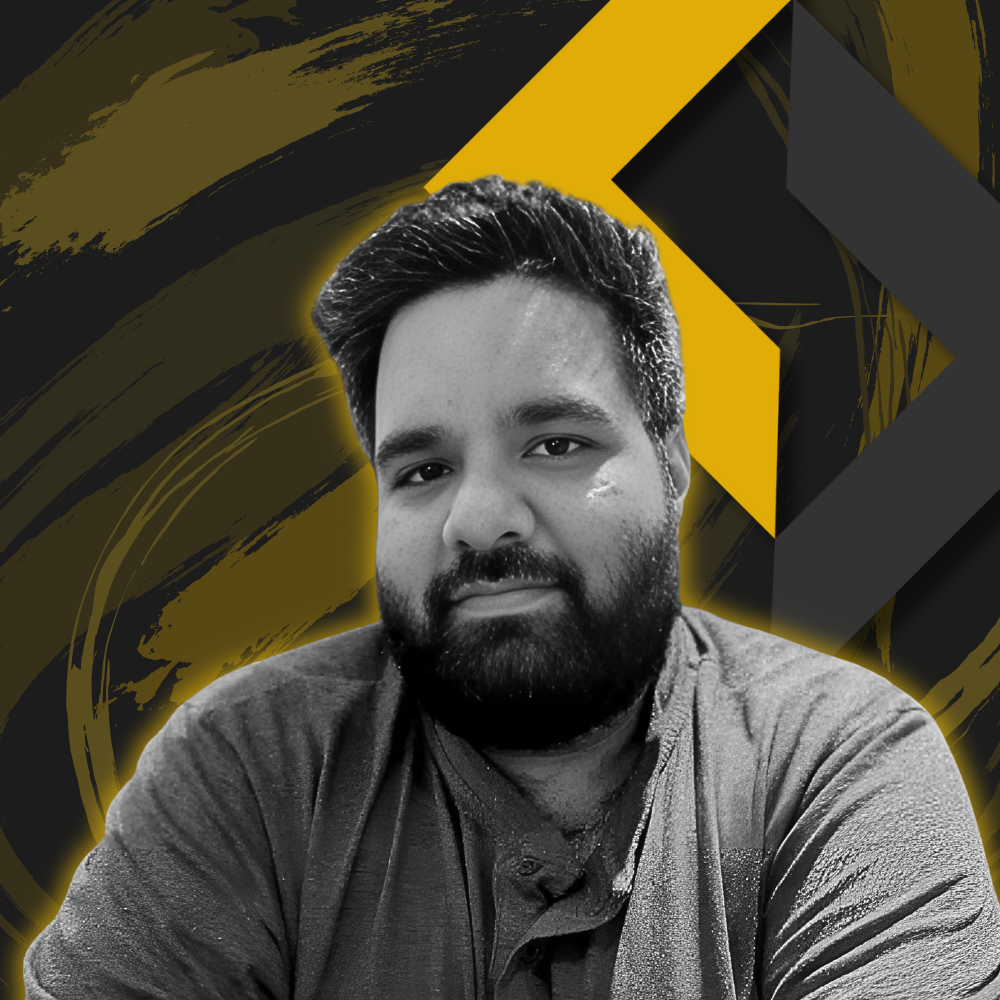
See, at the heart of it – I love solving problems for people using tech, it doesn’t get simpler than that.
I am known for constant experimentation and relentless execution.
Right now – my focus is to help everyday folks of Pakistan understand tech, career, and business better with everything I do.
