You still don’t understand money.
A simple question. What is money worth?
Money is worth based on how much someone is willing to pay.
The issue is most money advice just doesn’t work for people like us in Pakistan.
We don’t have massive stock portfolio options. We don’t have government-funded Roth IRAs. EOBI is a joke before you even mention it. There’s no clear credit scoring system in place. So most financial content, catered to the West, just doesn’t apply here.
What do we need then?
A mindset shift.
Now this is not going to be the next Rich Dad, Poor Dad.
What it is instead is advice grounded in reality. Advice that applies to us.
Three mindsets you need to adopt.
Easier said than done.
1) Saving and Investing Don’t Matter…Yet
When your average income is around 200 USD/month, following the famous 50-30-20 rule means you save 40 USD. Right?
Do some quick math.
If you save 40 USD every month, it will take you almost 20 years to save up to 10,000 USD. That’s the average price of the cheapest car in Pakistan right now. Lord knows what it’ll be in 20 years.
The thing is, besides the typical cost of living transactions, “stuff” is still expensive even in Pakistan.
Our cars cost similar to cars in the States.
Our iPhones, funnily enough, cost more. Thank you PTA.
Even our houses cost the same as most of the world, given you equate for infrastructure.
But our average earning is 20-40 times less than that of a country like the US.
What do you do then?
Earn more.
Easier said than done. But we are talking about a mindset shift here.
Now, let me address something that’s been trending lately.
Every other day I see a new post telling Pakistani youth to start investing. Open a brokerage account. Put 5k into stocks. Start your SIP. Build your portfolio early.
Sounds smart, right?
Here’s the problem. I’ve been there. And I’ve watched dozens of people in my community go through this.
Investing, when you’re still figuring out how to earn, becomes a massive mental distraction.
You start checking prices. You start reading news. You start worrying about red days. You start doing “research” on which stock to pick. You join Discord groups. You watch YouTube videos. You refresh your portfolio app twelve times a day.
And somewhere in all of that, you stop doing the one thing that actually matters at your stage: growing your income.
Very few people have the discipline to invest and still invest in their own skills.
Most people pick one or the other. And when you’re early in your career, picking investing over skill-building is a mistake.
Let me be clear. This is my official recommendation after years of mentoring people in the digital space.
First, grow your income to a stable level. Then worry about investing and saving.
What does stable look like?
If you’re solo, aim for 1,000 USD/month. If you have a family, aim for 2,000 USD/month.
Until you hit those numbers, your strategy is simple:
Spend less than what you make. Put the rest in a normal savings account. Chill.
That’s it. No stocks. No crypto. No complicated portfolio allocations. No mental energy wasted on markets you can’t control.
Your job at this stage is to increase your earning capacity. Every hour you spend “investing” 5,000 PKR is an hour you could have spent learning a skill, building a project, landing a client, or negotiating a raise.
The math is brutal but honest.
If you earn 50,000 PKR/month and invest 5,000 PKR, you’re investing 10% of your income. Let’s say you get a 15% annual return. That’s 750 PKR in a year. Congratulations, you made enough for a fancy biryani every month or khabbay ki sajji with rice perhaps.
Now imagine you spent that same mental energy getting 20% better at your craft. Or landing one extra client. Or negotiating a 10k raise. The upside is not even comparable.
Investing makes sense when you have surplus. When your basic needs are covered. When your income is stable enough that you’re not stressed about next month’s rent.
Until then, the best investment you can make is in yourself.
Next time, instead of thinking about how to save 10 bucks, think of how you can make 20 more.
This simple mindset is effective if you practice it daily. It will force you to focus on the right things.
You will never get stable by saving 20%. You need to earn 100% more first. Then worry about savings. Then worry about investing.
Trust me. Next time you think of saving money to buy your next fridge, instead think of making more money to fulfill that need.
The doors do open to the willing.
2) You Are Not “Asking” for Money
Often when I counsel my peers, especially those who aren’t getting paid their worth, this sentence comes up as a response:
“Saqib Bhai, mangtay huway bura lagta hai.”
“Saqib, I feel ashamed to ask for more money.”
Listen. It might not seem that dramatic translated to English. But this is another mindset issue prevalent among people who don’t understand how money works.
See, you are not asking for more money. You are asking for your worth to be paid fairly.
There’s a difference between begging and negotiating. Begging comes from a place of need. Negotiating comes from a place of value.
When you walk into a salary discussion or a client call and you feel like you’re “asking” you’ve already lost. You’re positioning yourself as the one who needs something. And that shifts all the power to the other side.
But when you walk in with evidence, with results, with a clear understanding of what you bring to the table, you’re not asking. You’re presenting a case.
Here’s what that looks like in practice.
Before your next raise conversation, document everything. Every project you shipped. Every problem you solved. Every time you went beyond your job description. Every compliment you received from a client or a manager.
Then translate that into value. If you helped close a deal, what was it worth? If you saved time on a process, how many hours? If you retained a client, what was their lifetime value?
Now you’re not saying “Can I please have more money?”
You’re saying “Here’s what I delivered. Here’s what it was worth. Here’s what fair compensation looks like.”
That’s a completely different conversation.
Next time you go for a raise, defend the ask with evidence. Show your potential. Translate it to value. And present the fact that you are not asking for more money. You are asking to be valued.
The shame we feel around money is cultural. It’s trained into us. But it’s not useful. And it’s not true.
You worked for that money. You earned it.
Asking to be paid fairly is not greed.
It’s self-respect.
3) Learn to Calculate the Value of Everything
As you progress in life, being on the path of success, you will quickly realize there is an opportunity cost to everything.
Opportunity cost: the loss of other alternatives when one alternative is chosen.
The problem arises when we fail to properly evaluate the choices we have in life.
Every big business converts every decision of theirs to monetary value. They don’t just “feel” like something is worth it. They calculate it. They model it. They compare options.
You should do the same.
Every “yes” to one thing is a “no” to something else.
Frameworks like Fear Setting help you understand the cost of your choices. Or lack thereof. What’s the worst that could happen if you quit your job? What’s the worst that could happen if you don’t?
Read this: https://tim.blog/2017/05/15/fear-setting/
Workshops on pricing and positioning help you understand the value of your work. What are you actually selling? What is it worth to the client? Why should they pay you more than someone else?
Watch this: https://www.youtube.com/watch?v=RKXZ7t_RiOE
The mindset shift you need is this: everything has a value. Everything you do. Everything you experience. Everything you stand for. It all has a cost.
Sounds depressing. It kind of is.
But when you get really good at calculating the value of everything down to the penny, you learn to make decisions that fulfill you.
Months ago, I made the decision to make the most money possible within a month. I failed. Because in order to do so I would have to work 16 hours a day. An activity I don’t value enough.
Months later, I shifted my mindset. How about let’s make the same money, but work as little as possible? I succeeded. And now my free time lets me write this for you. Something that is more valuable to me.
That’s the real game. Not maximizing money. Maximizing value.
And value is personal. It’s different for everyone. But you can’t optimize for it if you don’t know how to calculate it.
To Sum It Up
Forget saving and investing until you’re earning enough to not stress about it. If you’re solo, aim for 1k USD/month. If you have a family, aim for 2k USD/month. Until then, spend less than you make, put the rest in a savings account, and focus all your energy on growing your income.
Learn to ask the right way. Know your worth. Show your worth. You’re not begging. You’re negotiating.
Everything has a price. And knowing that will help you cherish value better.
With or without my help – I wish you the best.
The Wandering Pro is a quiet, steady corner of the internet for people figuring out their next move in tech.
Whether you’re a freelancer, a junior developer, or someone building something for the first time – this is a space for showing up, learning, and making progress at your own pace.
If that sounds like what you need, come be a part of it.

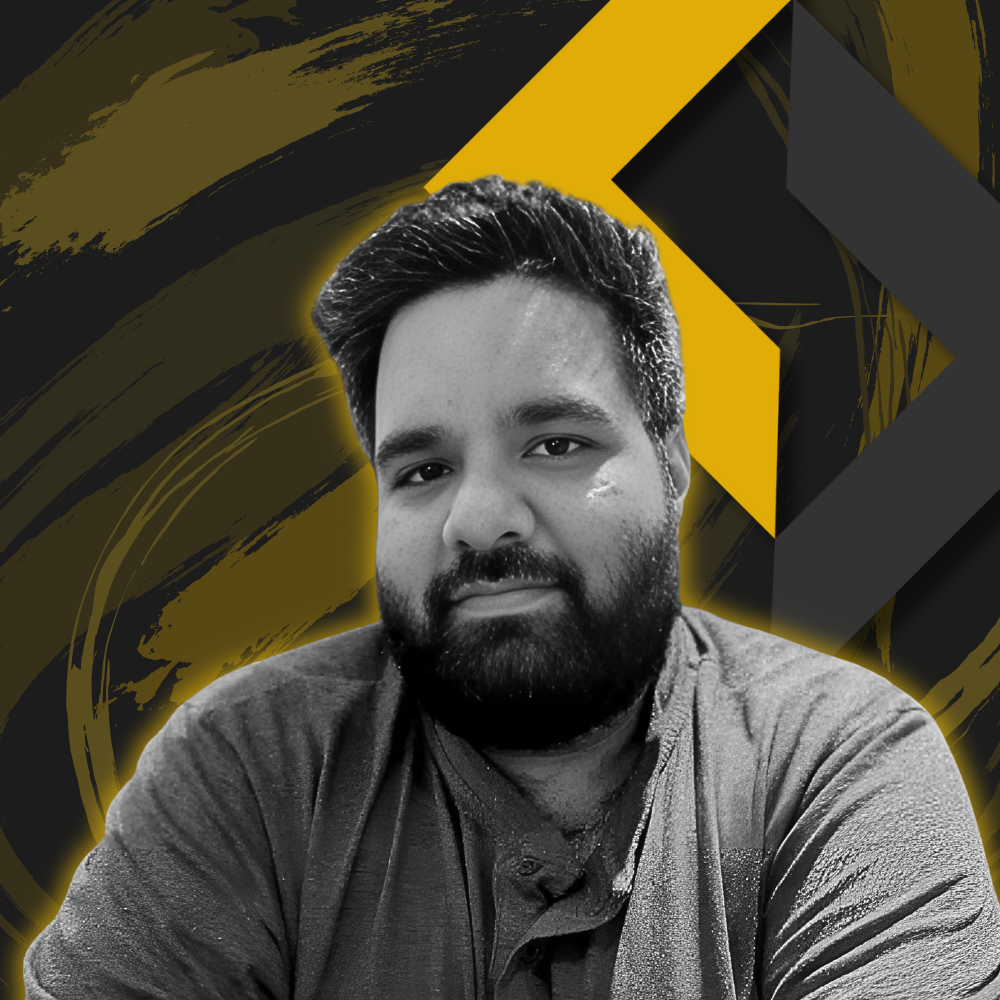
See, at the heart of it – I love solving problems for people using tech, it doesn’t get simpler than that.
I am known for constant experimentation and relentless execution.
Right now – my focus is to help everyday folks of Pakistan understand tech, career, and business better with everything I do.